
Many years ago sometime in the mid-late 90s when I was a junior legal secretary and working part time with the community care crisis team, I was fobbed off and ignored by a psychiatrist whose total disregard for a patient and utter contempt for me, was one of the main reasons I ended up going down the path of safeguarding vulnerable adults / managing dementia care.
I’d been asked to sit with a lady whose family were bereft at her supposedly having gone mad overnight and keep her safe until she was assessed by mental health. For a full hour she described the most bizarre and incredible hallucinations mostly seeing a little girl in Victorian dress, sunflowers that would grow and completely surround us both and a little black and white dog I seemed to think she saw in the form of a springer spaniel.
“Ethel” was an intelligent lady and said she knew the girl and dog weren’t real because she’d been leaning to try and touch them both of which would disappear as soon as she did. Once or twice she went “Ooh the little dog’s there – can you see him?”
“I can’t see him no… what is he doing though what can you see?”
“Well he’s just sat there lovely thing but look when I lean to stroke him. Gone. He’s gone again they always go when I try to touch them that’s why I know they’re not real”
Even then as a very young and inexperienced teenager, I knew she wasn’t “mad” in the sense. Her vivid descriptions of what she saw were by far the most bizarre thing I’d ever heard and reminded me of experiences with LSD but she seemed lucid and clear as a bell. Ethel herself even suggested the hallucinations she was having might have been linked to a recent operation she’d had and was still wearing a patch from. “My son thinks I’ve lost my marbles he’s the one that rang for you to come here and see if I’m doolally but I’m not love.. honestly I’m all there it’s just my eyes playing tricks”
Consultant psychiatrist arrived speaking in a very thick Asian accent and broken English (Ethel was Scottish too so you can imagine how that one went!!) but despite me trying to explain the conversations we’d had for the last hour, he wasn’t about to have a kid tell him his job and in one quick scribbled signature, she was admitted to the secure mental health unit for older people. I have never nor will I ever forget that lady and how she pleaded and begged the psychiatrist (and me) to believe her and she wasn’t going mad. I doubt she will ever have returned home to her flat and will probably have lived out the rest of her days in care pilled up the eyeballs to keep her quiet and manage what was nothing more than her eyes playing tricks.
The long, short and horrible truth is that very few people gave the tiniest toss for older people. It’s what set me down the path and how / why I ended up working specifically in dementia care and safeguarding vulnerable adults
When I read about “Charles Bonnet Syndrome” some years later it broke my heart to realise that’s what Ethel was suffering from and even she knew it was linked to her sight but back during the 90’s we lived in a very different world when it came to care of older people. I have known people being very close to misdiagnoses due to CBS as recently as last year however so we’re still in urgent need of educating those that think they’re beyond the capacity to learn anything more. *Never trust anyone that really takes the view they know all there is to know or can’t learn something from a mere member of public, younger person or unqualified carer. That’s the height of stupidity and ignorance right there.
The video and TED talk with Oliver Sacks is outstanding and worth setting aside 20 mins to watch with a brew.
I later began teaching staff in dementia care and used my own little way of getting points over acting out roles to really emphasise the point which everyone loved and said was so much better and they found much more useful than other training sessions / tutors (former actress with national youth and musical theatre don’t you know luvvies!!) For a while I reserved that teaching style for staff I worked with and knew well not expecting the wider world to understand or find remotely amusing but then I discovered the brilliant “Teepa Snow” whose style and methods are very similar to that of mine. Again another longer clip but if you get comfy with a brew and a biscuit, she’s well worth the 20 mins talking about dementia here here
Anyway for years I been using this this toolkit published and available to download by Alzheimer’s Society – a brilliant organisation with whom I have been working, helping and don’t intend to appear like I’m ripping on with this. Far from it they have my utmost respect but can only work with what they have so don’t have the luxury of being able to chop and change the way I have during assessments. I only make variations to some of the questions based on each person and my understanding of their general knowledge, abilities and limitations.
Nevertheless the toolkit is outdated, irrelevant in many ways and doesn’t always take into account the huge differences people with dementia have – indeed a few professionals don’t even have an understanding that there are many types of dementia – the word being a general umbrella term to describe many types. It’s like someone being diagnosed with “cancer” of which there are countless types all requiring specific treatment.
You can’t write “has cancer” and expect it to offer a clear, accurate diagnosis or even adequate level of care, support and treatment.
So within reason I have been making minor adjustments to how I assess and sad thing is we’re not supposed to improve or change things on the hop but it’s so unrealistic and unfair.
There is little room for error – even correct ones and I question whether it’s appropriate for external professionals to be calling it based mostly on just their very brief period of time with someone they may have never met before and without consultation with family, friends or carers.
One lady “J” I used to look after suffered from severe Parkinson’s and was being written off something shocking by a GP who came out to see her, decided to do an on the spot assessment and was scoring her down like he was being paid a tenner to fail her on each question.
“J” was difficult to understand at the best of times but once you knew her, you could understand and converse without any problem. She was a nervous lady and at just 61yrs of age was very young and one of the first and few people to be fitted with an apomorphine pump. Having an impatient doctor she could barely understand looming above her didn’t help (not sat informally he literally stood over her as she lay in bed stiffened from seizures)
He asked what year it was and she slowly stuttered “Twenty…. two thousand” and he interrupted with a loud scribble on his papers muttering “OK so she is confused as to time and place” and I went “Whoa whoa hang fire – she knows what year it is let her finish” and he said “But she answered that it was the year twenty and then two thousand”
I smirked and went “You’re kidding right??” then leaned in and said to a really terrified looking J “It’s OK sweet don’t worry we’ll do that one again. What year are we in at the minute?”
“Twenty seventeen… or two thousand seventeen… not sure which is the right way to say it” I gave her the double thumbs up and went “Nailed it”
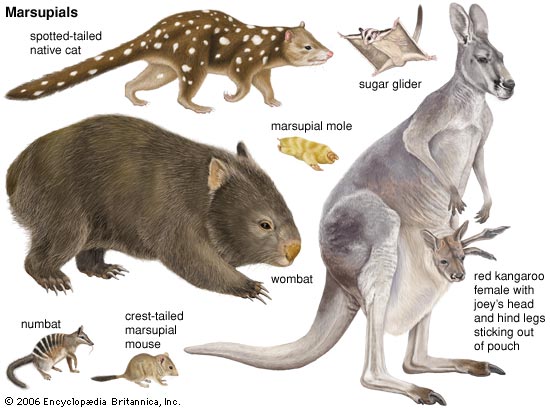
He asked her to “point to the one which is a marsupial” and she went “A what?”
The term “Marsupial” was one she’d never heard of before – not everyone will so again I chipped in “Which might you associate with the word “Skippy” and without missing a beat “The kangaroo”
“Which two objects are musical?” (Harp and accordion straight away)
Which object is nautical?” (“What? What’s Nautical?”)
“Linked to the ocean – ”
She answered before I could finished with “Penguin” which technically wasn’t wrong – ocean and penguin do go together so I re-worded the question and asked “Which is linked to sailing / the Navy” and straight away “Oh – Anchor”
Bearing in mind this assessment has been completed with vascular dementia many of whom can’t take in and process information that way. I have Dyscalculai (number dyslexia) and get major brain overload if hit with information I neither need nor can work with. I like it short, sweet, simple and for that reason understand how horrible and frustrating it is to be bombarded with lengthy complex instruction.
One of my all time “favourite” residents (even though I’m not supposed to have favourites but it’s impossible not to with people like her) was Phyllis who had vascular dementia and like many would get flustered and flummoxed. I used to joke that when she got herself wound up she sounded like Mr Jelly all “Lloobboooblbooo!!” thinking the world’s going to end when a leaf brushes the window which had her in fits of giggles because she knew I adored her and agreed she did “get my knicks in a twist”
I’ve been in the job a long while and like to think I get the best from people by approaching things in a way that works best for them. I couldn’t joke and banter with everyone the way I could with Phyllis and vice versa but if you molly-coddled her too much it made her worse and the bawling gave way to actual tears and distress so you had to stop her in her tracks before she go run away with herself.
Ask if she wanted to wear a blue jumper because it will go nice with the tartan skirt and necklace or the pink top that will match her beige skirt and pearls… She’d never answer that in a million years without collapsing into tears.
Quite often she’d start telling you she doesn’t know anything anyway so you’d need to stop her – pick both tops up and in a nice loud and clear voice “Phyllis!! Which one? Blue or Pink?”
“Pink”
So when Phyllis had a visit from the same impatient GP I made sure I was there during the assessment. He visited with a young OT who was pleasant enough and very nice towards but got her in a pickle from the from the outset reading long paragraphs of text directly from the page and confusing me as well.
“Phyllis I am going to give you a name and address. After I have said it, I want you to repeat it. Remember this name and address because I am going to ask you to tell it to me again in a few minutes: John Brown, 42 West Street, Kensington”
Phyllis burst into “I can’t remember anything I’ll never answer that I don’t anything me I just don’t – “
Me – “OK stop stop stop. Phyllis. Remember this – “Mr Smith, High Street, Town” Say it with me first (she said it with me no problem) “OK try and remember I’ll ask you in a tick”
She said tearfully she’d never remember (always did) but I chipped in and with very little prompting save for gestures with my hand to indicate she was right and could keep going she recalled the name and address.
To satisfy the GP and OT we did the name and address from the assessment – same way allowing her a bit of extra time and patience – she nailed it.
They were about to score her down for being unable to recall the last year of the second world war until I gestured for them to give her a minute or so. The second world war ended a long while ago she’d slept since then and her brain wasn’t up to pulling facts and figures out the back so easily.
She correctly answered but here’s the interesting thing.
The question directly after is “Who is the present monarch” and Phyllis – as others have done answered “King George” which to be honest impresses me every time.
I’d struggle to answer that without a few mins and a quick search on Google so when she was being marked down, I chipped in and pointed out she’d just had her brain go digging in the back of the store room to recall info from WWII so with the question straight after relating to the monarchy, it’s not completely unreasonable for her to have answered the monarch back then rather than now. The OT got what I meant and nodded “Ahhh yeah of course” so allowed me to reword it.
“It was King George you’re right but who is the present Monarch – who’s on the throne now?” “Oh ermmm… Elizabeth”
So later this year one of my oldest and closest friends and I are going to sit down and look atthe assessment toolkit from scratch.
She is a highly esteemed clinical psychologist and therapist, one of only a handful qualified to teach a very unique form of intensive therapy and assistant professor at a university in Canada.
I have formed alliances with friends and colleagues (past and present) many of whom are in a great position to help get things brought right up to date – three are OT’s, two physios and the rest a nice mix of social workers and registered managers. Without collective clout, qualification and expertise anything put forward to give clinical toolkit a revamp will be worth minus four jack-diddly-squats.
That said without the hands on, direct care experience of health care assistants, friends, family and others not considered to be knowledgeable enough to be worth listening to – changes to assessment toolkit aren’t worth diddly either.
I volunteer as a dementia friend, champion and offer informal training to care home staff so have already invited people to bombard me with their views, thoughts and opinions whatever they are but there are always going to be things missed and not even give a thought unless and until. Those not already familiar with or following Kate Swaffer should pay her a visit as it was a recent post of hers that prompted this.
Much is based on individual experiences but that’s what counts. I would love to hear from anyone that has a thing or two to chip in with – even if it’s just to vent and release similar stories.
I’m all ears and can only promise everything will be given due time and attention to see how we an work it and at the end of this year, I’ll bring everything to what will be long weekend sat pouring over the assessments and trying to drag it kicking and screaming into 2020
The good thing is we’ve come a long way since back when I escorted Ethel to the mental health unit as an unqualified “bit of kid” as was the term used to describe me.
Minimum care standards and safeguarding policy stepped things up and the more recent introduction of mental capacity / deprivation of liberty safeguards came into play and have at least made sure we don’t see more cases of Ethel or young, unqualified carers ignored as standard.
Still having some problems with MCA / DoLS assessments and such but we will never have perfection nor the need to stop doing everything to improve.
My son has many health and learning disabilities including sensory processing disorder which affects the way his brain “sees” and processes information to the extent the lead Occupational Therapists asked for permission to use his assessment and results as part of training. She had never seen anyone whose brain processed information the same way and it was so unique I understand his task of copying the Olympic rings is currently rolling around on handouts given during training.
Sam spent ages drawing an outline of what looked like a flower and then filled in curves and lines inside of it. Took him ten minutes after which he was asked to describe the shapes and asked if he recognised the image as circles overlapping. Only when it was pointed out did he go “Oh yeah… I didn’t see it like that until now”
Sam was failed miserably and referred to specialists so late the OT went nuts and said he was too old for therapy and the best she could offer was support for him in the shape of extra time and use of laptops, aids and adaptations to make his life easier whilst studying and whilst she diagnosed severe dyspraxia when he was 11yrs old, he was only formally diagnosed with Asperger Syndrome at 16yrs following five years being home-schooled because the local authority refused to accept the level of difficulty he would have being placed in a failing secondary school with nearly 2000 pupils about thirty of which had already bullied him relentlessly throughout primary school.
I knew Sam would struggle with a considerable part of the cognitive assessments used for older people so got him to complete the tests with me.
His score was dire. He’s absurdly intelligent with a daft high IQ but were he not 17yrs of age and a borderline genius he’d have been misdiagnosed for sure.
The questions regarding the former female prime minister and current prime minister caught him out because the current PM is female. He also tripped up re: name of US president and the one assassinated during the 60’s – initially answering Kennedy for both then backpedaling having realised his mistake.
What made him screw his face up like he’d just taken a swig of last week’s milk?
“WTF is a marsupial?”
 Auntysocial